
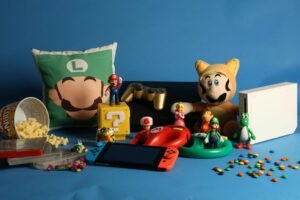
On January 9, 2026, Nintendo shared promotional images for it’s My Mario line—and the internet did what it does best: zoom in, screenshot, circle a detail, and turn it into a verdict. The spark was tiny but explosive: hands and thumbs that looked “off” to some viewers. Within hours, a chunk of the conversation wasn’t about the product at all, but about one question: “Is this AI?”
Nintendo denied using generative AI in the images, and one of the models involved also stated publicly that the shoot was real. And yet the suspicion didn’t fully evaporate. That’s the interesting part.
The real shift: perception, not just production
For years, polished promo images have been normal—clean lighting, smooth retouching, “catalog-perfect” styling. Mockups and renders are also standard tools in branding: they’re visualizations, not technical proof.
But now we’re in a new phase where the public has learned a visual shorthand for “AI mistakes” (hands, proportions, weird micro-details). So when a real image accidentally lands in that same uncanny zone—whether from pose, retouching, compression, or styling—people may label it “AI” instantly.
The lesson isn’t “don’t do clean visuals.” It’s: clean visuals can be misread faster than before, and that can steal attention from your message.
Where AI actually helps (and why it’s not the enemy)
Used well, AI is a practical tool in branding and advertising:
- breaking creative blocks (concept routes, naming directions, copy angles),
- exploring variants quickly,
- building fast concept mockups to sell an idea before spending on full production.
That’s not deception—that’s efficiency. The key is keeping the boundary clear: concept visualization vs. production reality.
Why Nintendo’s case matters to small brands too
Nintendo can publish a denial and still have the meme live on. Smaller brands don’t always get that second chance. If your campaign becomes “hand analysis season,” your positioning gets buried.
So the smart move isn’t to ban AI or ban renders. It’s to manage how your work is read:
- Treat mockups as mockups (visual context), and keep print/production in its own lane (specs, dielines, proofs).
- Double-check “high-scrutiny zones” (hands, tiny text, geometry, repeated patterns).
- If authenticity is central to the message, have a simple backup ready: a behind-the-scenes clip, a product photo, a short production note.
Bottom line
The Nintendo “My Mario” moment wasn’t really about whether AI was used. It was about the fact that “looks like AI” has become a new kind of public critique—sometimes accurate, sometimes not. In 2026, part of creative direction is knowing when your image might be misclassified and making sure the campaign doesn’t lose oxygen to a viral thumbnail of a thumb.